Leaving home
The ongoing full-scale invasion that Russia forced upon Ukraine on 24 February 2022 has impacted the life of every Ukrainian. The destruction from frequent drone attacks, heavy shelling, and fighting has left 3.7 million innocent civilians displaced from their homes, seeking safety in more secure regions within Ukraine. But nowhere is truly safe. With the entire country under daily threat of drone and missile strikes, 6.9 million people have sought refuge in other countries as of February 2025. Among them, a total of 223,000 people arrived in the United Kingdom through the Homes for Ukraine and the now closed Ukraine Family Schemes, as of 31 March 2025. These schemes were launched by the UK government in May 2022 to provide a temporary humanitarian route for Ukrainian nationals fleeing the war, offering them safety, accommodation, support, and the full right to work and study.
Some arrived alone, others with their families, but all of them left their lives in Ukraine and were forced to start over. How long does it take to adapt to a new country with a different culture? How do you stay connected with “home”? And how do you live with the uncertainty of visas and an ongoing war?
This project was born from my own experience and my desire to raise awareness of how war affects innocent civilians, people who never chose to be in these circumstances. “Refugee,” a word with implications I still struggle to accept, now defines a reality in which I have personally learned the challenges and adversity you must overcome when you are forced to begin again in a country you don’t recognise. What it takes to get through the adaptation period and rebuild your life step by step. The frustration of being misunderstood because of the language barrier. The daily guilt of leaving home. The loss of connection with friends and loved ones who stayed in Ukraine. These are just a few of the experiences that have shaped my journey and continue to do so, albeit they are not unique feelings, nor a unique story.
Below are twelve photographs, three individuals, and three personal narratives. Yet all are connected by a shared experience and shared challenges. Together, they reveal what displacement truly means, beyond the numbers and statistics we are accustomed to seeing.
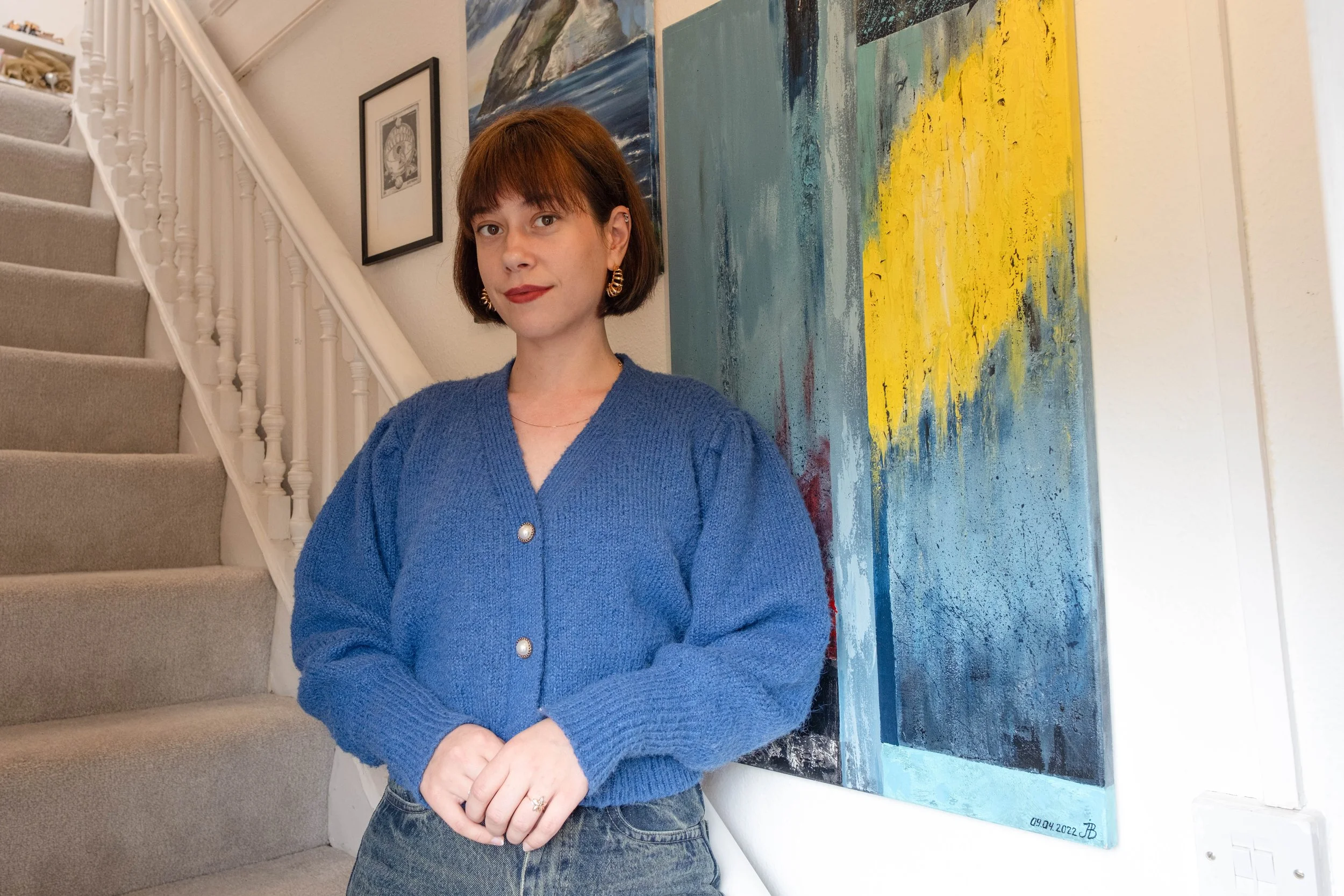
Iryna arrived in the UK in May 2022.
“The first 1.5 years were the hardest. Loneliness, because I came alone. Getting used to someone else’s home and someone else’s way of life. The thought that in the next month or two I would return home to Ukraine helped me. I had a calendar on the wall and crossed out the days. It became easier when I returned a second time with my husband and with the understanding that we were together and it would be okay regardless. Before the full-scale invasion, I worked as a graphic designer and also invested a lot of money in art materials because I wanted to return to painting, which truly dear for me. After arriving, I started working as a waitress, but at first I wasn’t given many hours, and after work I painted so that I could sell it through locals. Later, I was offered a contract at a hotel, and this became the priority because it provided stable income and allowed me to save money in case of another move.”
“This necklace represents, for me, an unbreakable belief in a brighter future where there is peace.”
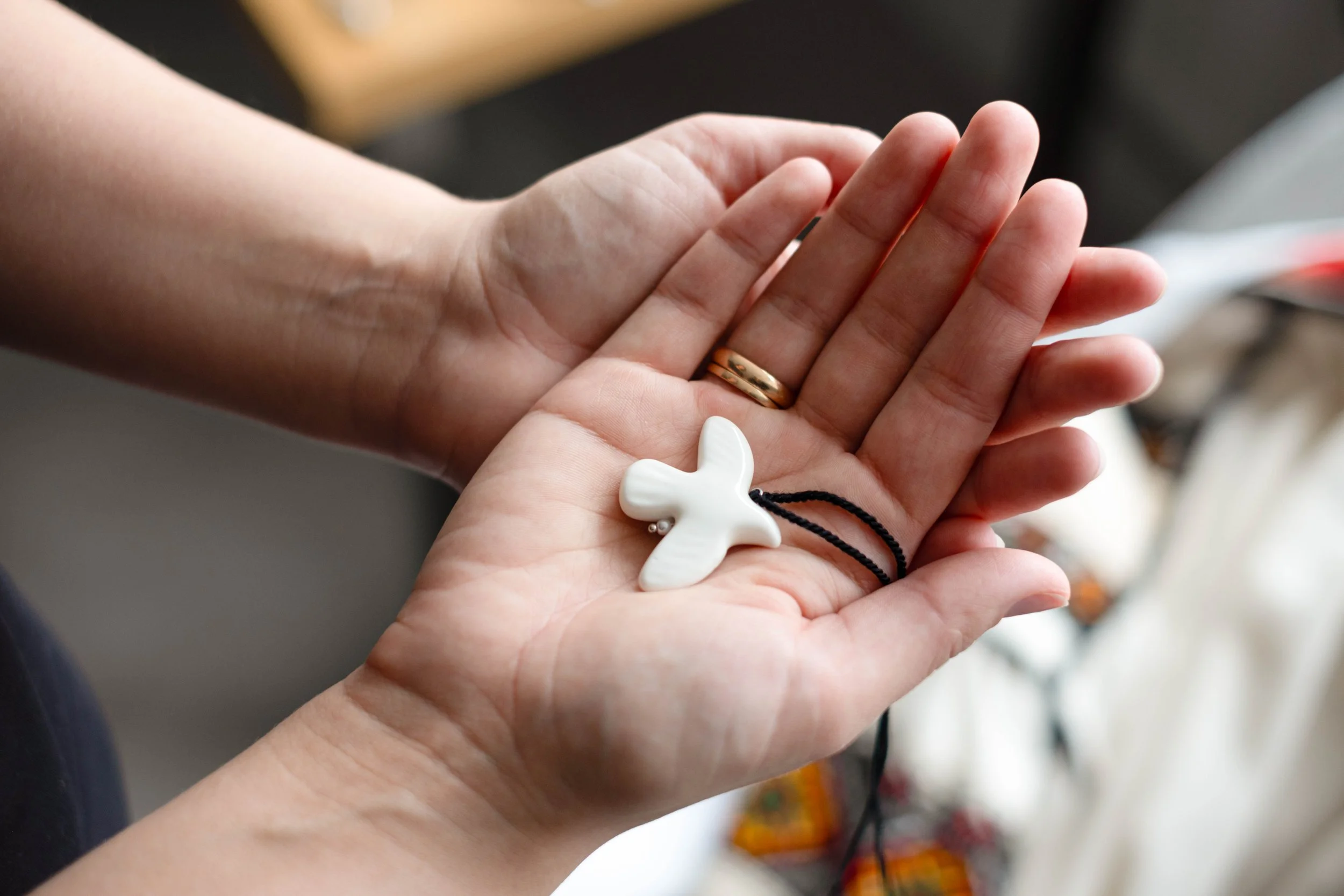
“I received this pendant as a gift from the organisers of the art exhibition in Epsom, “Ukrainian Woman in Art”, where I took part. It’s a very warm memory that I carry in my heart.”
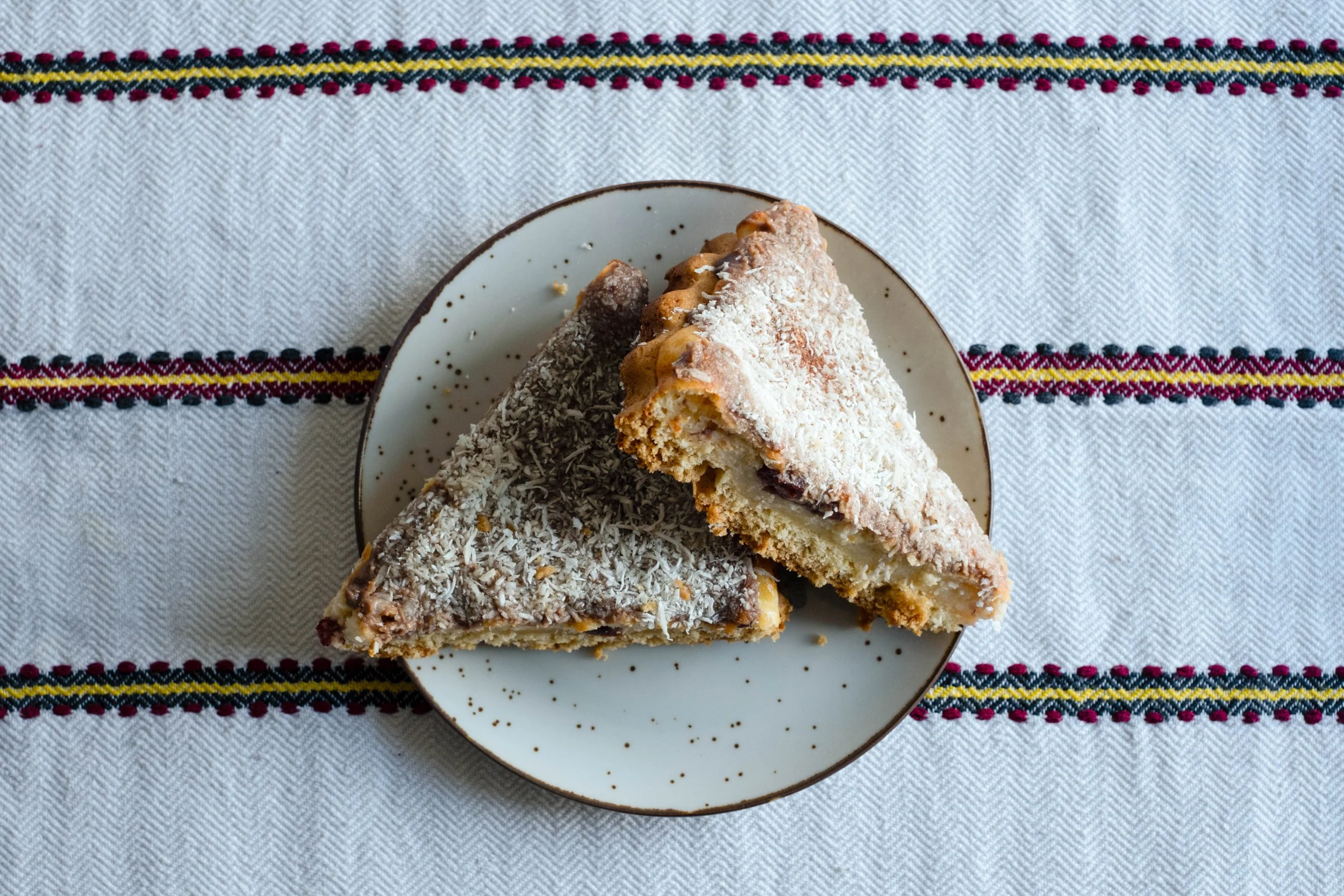
“Since I arrived, I have often cooked Ukrainian dishes for my host family and continued to celebrate holidays such as Christmas and Easter according to our traditions. In Ukraine, we celebrate St. Nicholas Day on December 6, and even here in the UK I’ve kept this custom by placing small gifts under the pillows, just as we do back home. I miss our food, and the dish I make often is syrna babka, a Ukrainian cheesecake.”
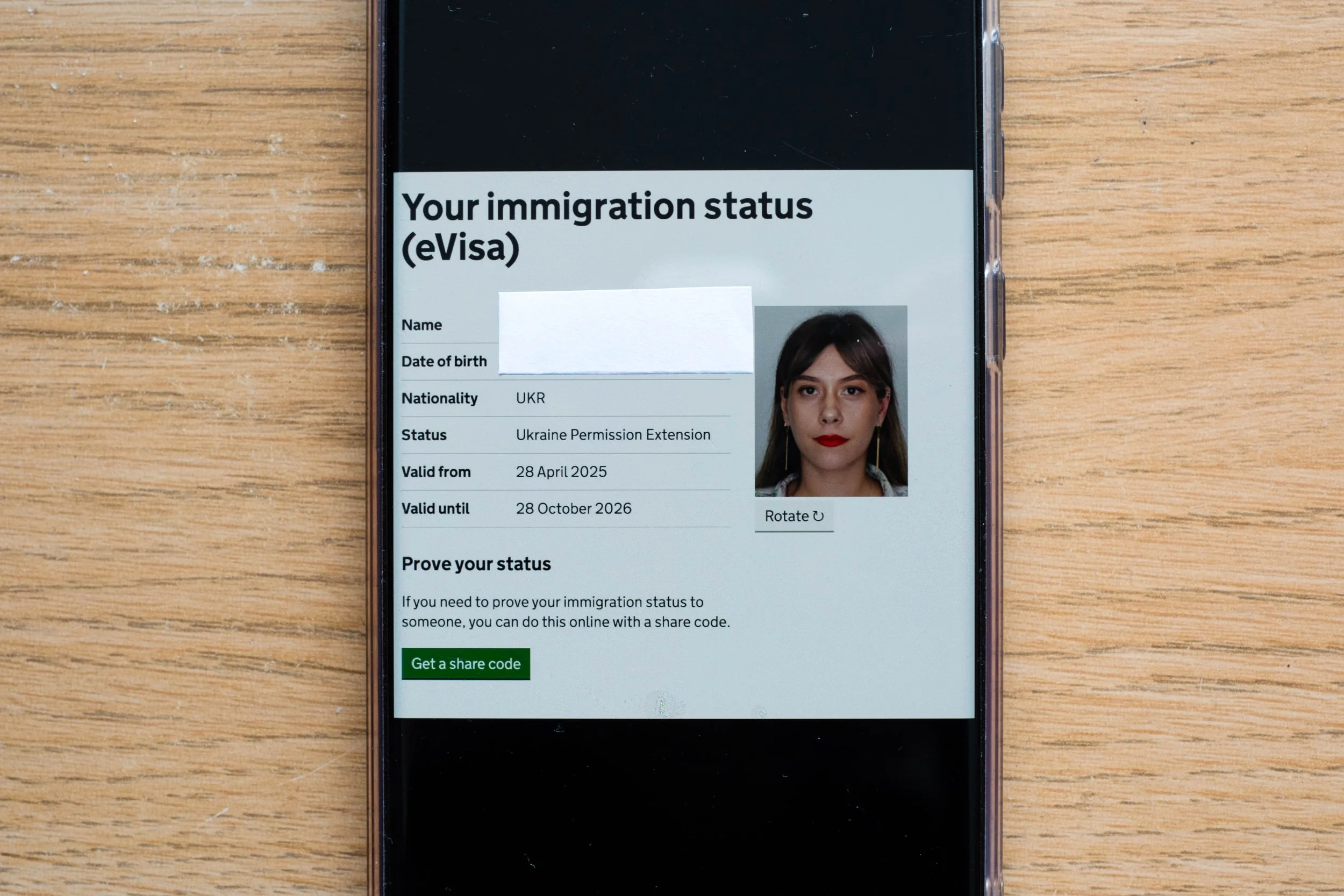
“I constantly keep in mind that I may have to leave everything again and move to another country.”
“I’ve already extended my visa for another 18 months, but the uncertainty about what will happen after that is very frustrating. It affects nearly every aspect of my life, from work opportunities to something as basic as renting an apartment. I’m looking for a better job, but every employer asks about my visa duration.”
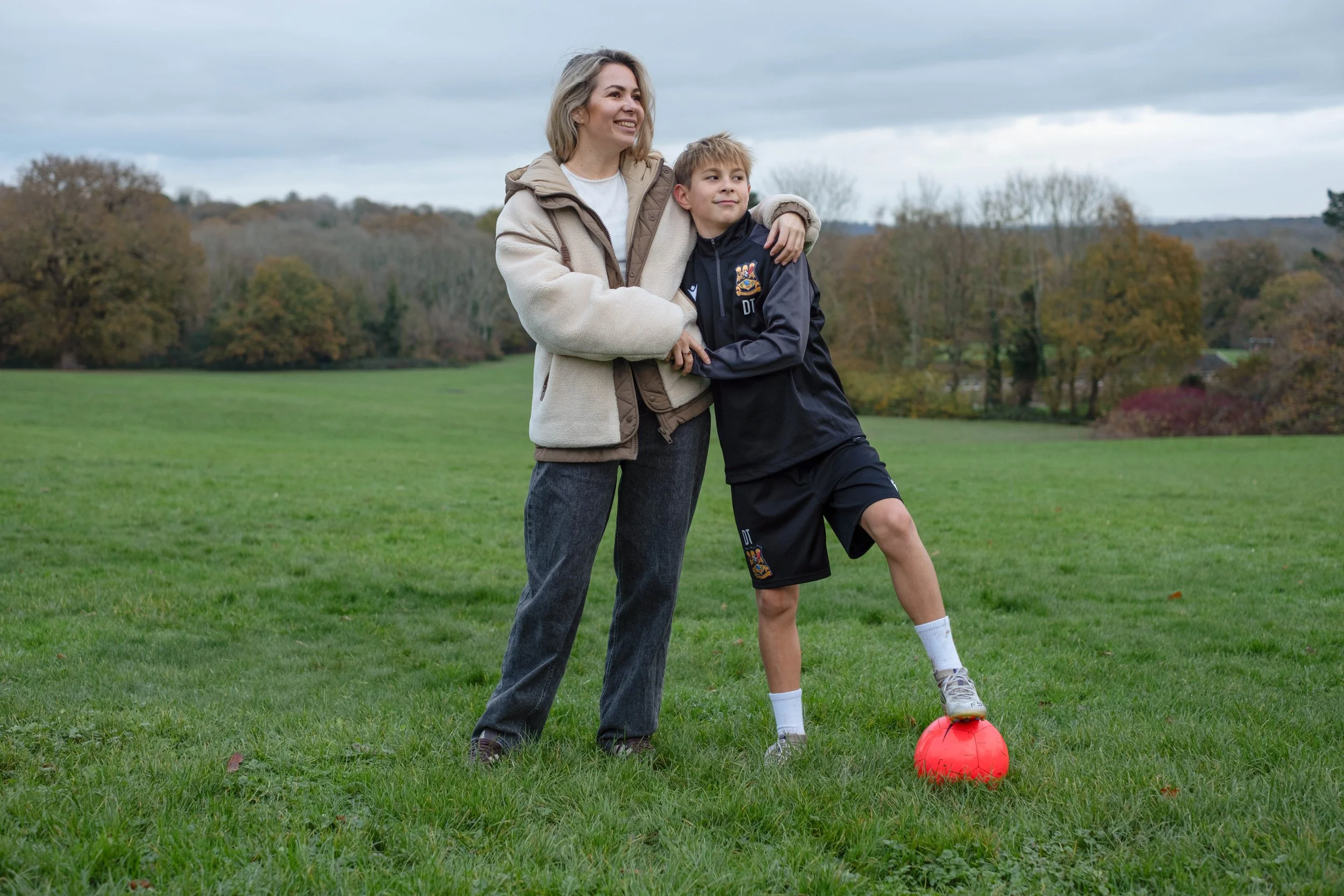
Anastasiia with her son Danyil arrived in the UK in May 2022.
“As soon as the war started, we went to Kraków and lived there for two months. Later on, my friend encouraged me to apply for the Homes for Ukraine scheme. The hardest part of adapting was school for my son. He was seven and didn’t know any English at all. For the first three months, he cried and didn’t want to go, even though the school did a lot to support and encourage him. I signed him up for a football club. He now plays for the local team and really enjoys it. Having a close friend who arrived through the same scheme and being lucky with finding a job quickly after arriving was very helpful for me. Back in Ukraine, I ran a clothing brand together with my ex-husband. Now I work in a small company and also do freelance projects, creating websites and managing social media pages for small businesses.”
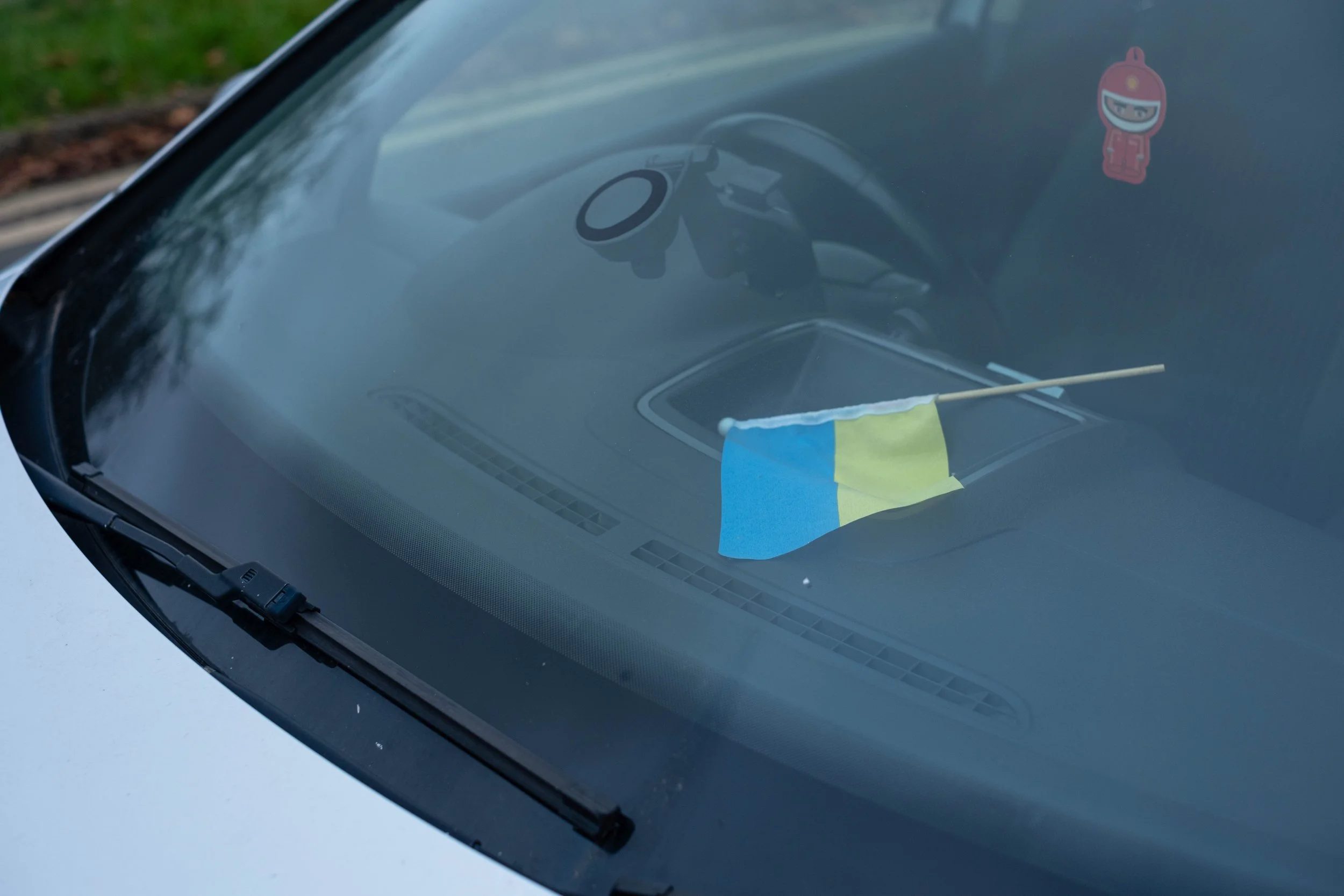
“Almost four years have passed since our arrival. By now, I’m used to life here and have my own circle of friends, but every so often, something triggers a memory, and I find myself missing home.”
“No matter how long we stay here, no matter how well we are treated, and no matter how “settled” we feel, our heart and soul will always belong to our homeland, to the place where we spent our childhood, where every street, everything is familiar.”
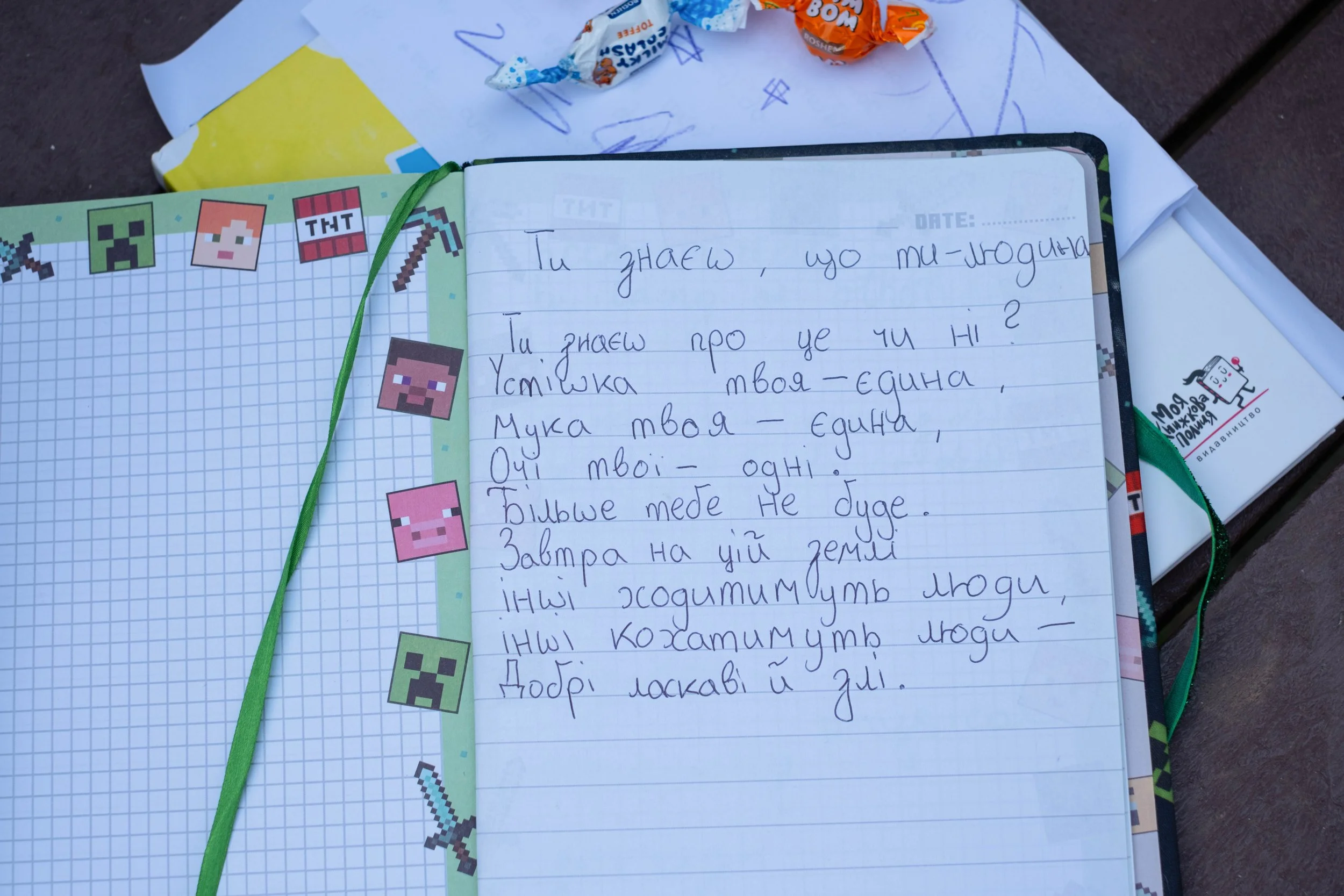
“Alongside keeping our Ukrainian traditions, such as celebrating holidays and cooking our food, we stay in touch with the family back home. It’s very important to keep this connection. My mom teaches my son Ukrainian grammar, since he didn’t attend a Ukrainian school for long before we moved. We don’t know what expects from the future, whether we will need to come back or not.”
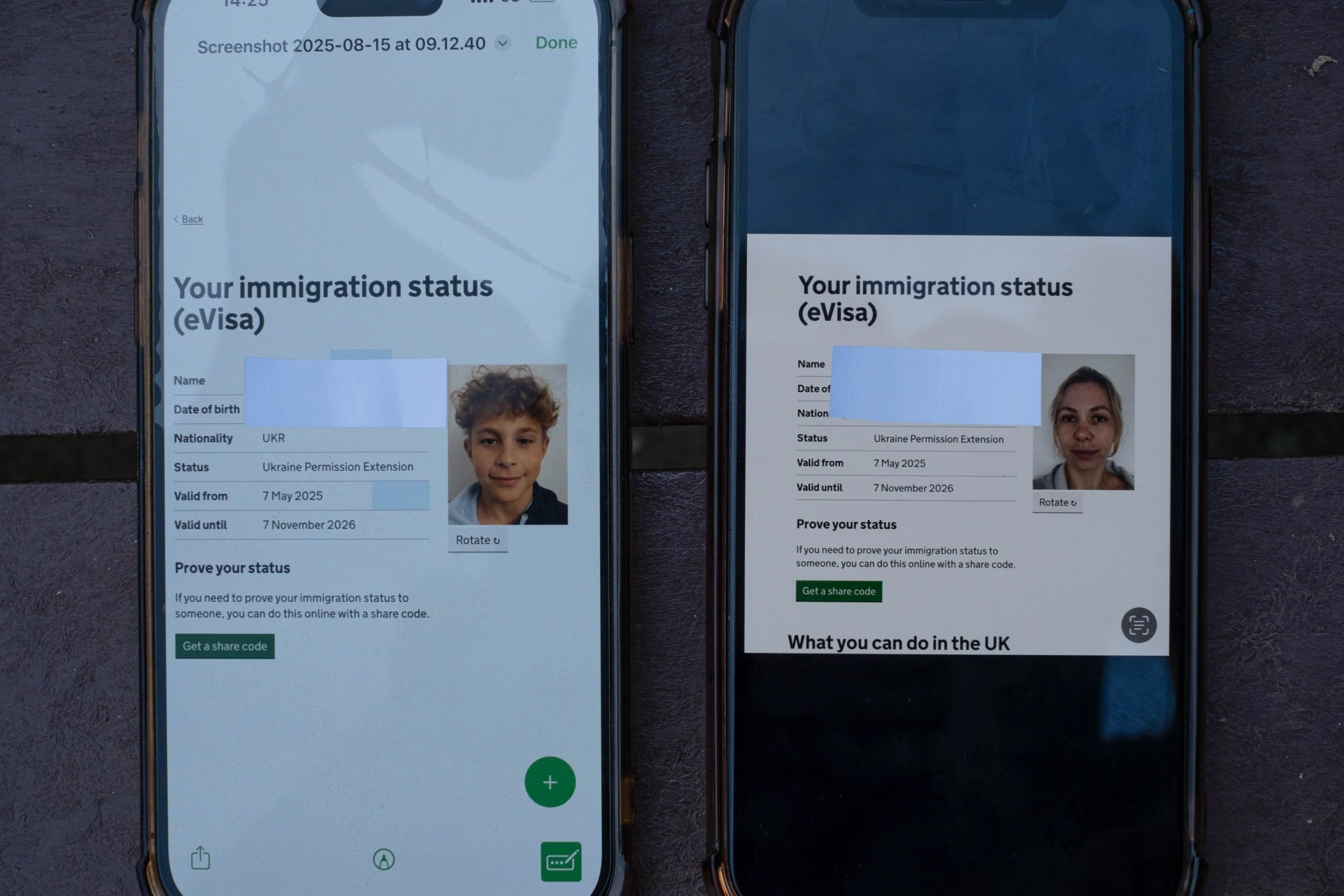
“There is a lot of anxiety around visas and what the future holds. I worry about Danik’s education, as he is already in his seventh year here, and changing everything again would be very difficult for him emotionally. On top of that, finding a good, stable job is challenging, every employer asks about visa duration, and their response is often affected by it, making it much harder to build a career.”"
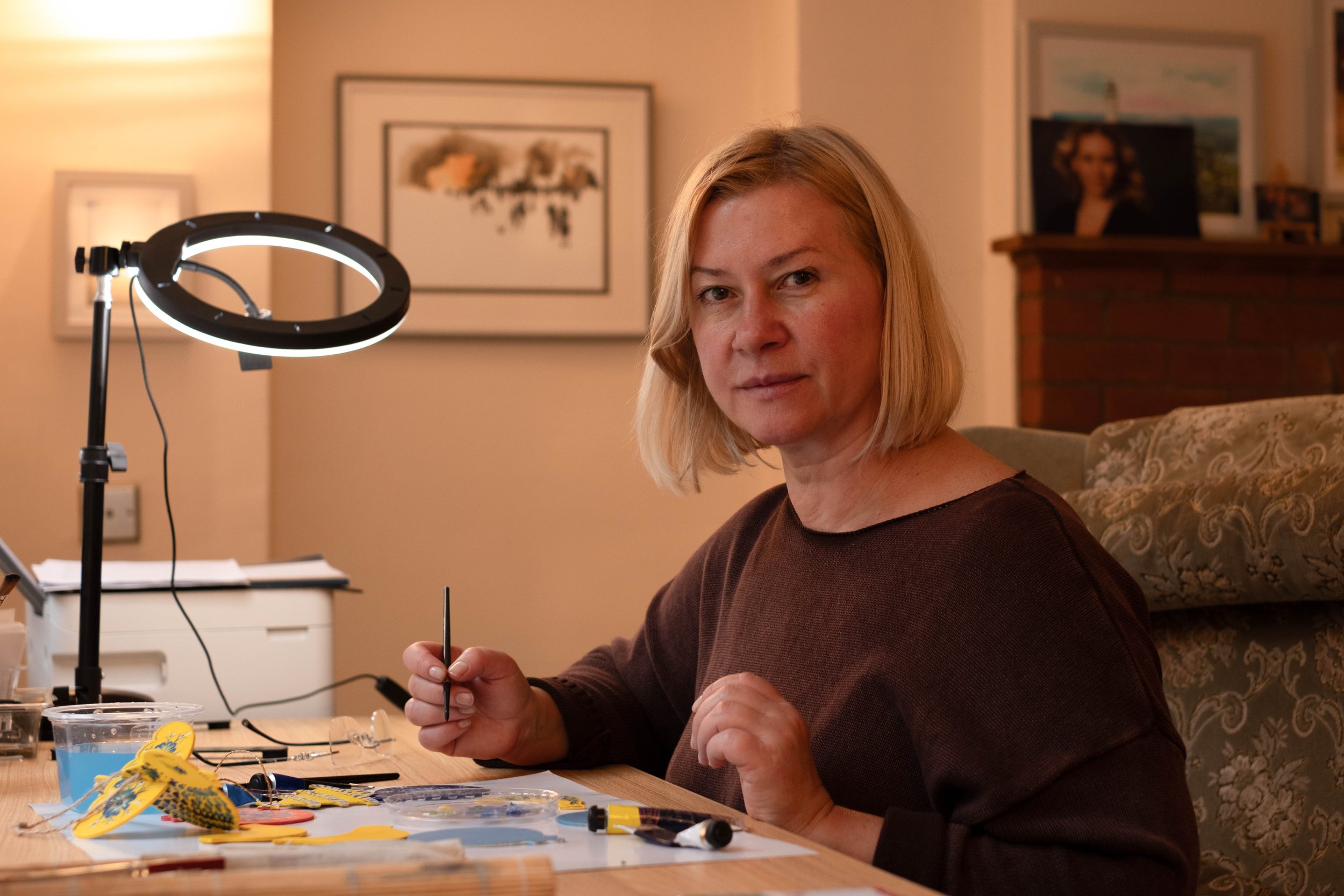
Victoriia arrived in the UK in June 2022.
“I never imagined I would stay this long. I thought I would spend the summer here and then return to Ukraine. I’m still in the process of adapting, but at times it feels as if this journey has paused because of the language barrier. I’ve also come to accept that I may never feel fully settled. In Ukraine, I worked as an art teacher and painted alongside it. Here, besides working part-time as a yacht valeter (preparing the yachts for charters), I also conduct art therapy workshops for both adults and children. Soon, I will also be leading a lesson on Petrykivka painting, a traditional Ukrainian decorative art technique. Receiving positive feedback from participants feels incredibly rewarding; it shows that my work connects with others. It also gives me the chance to keep Ukrainian traditions alive and share them with a wider audience.”
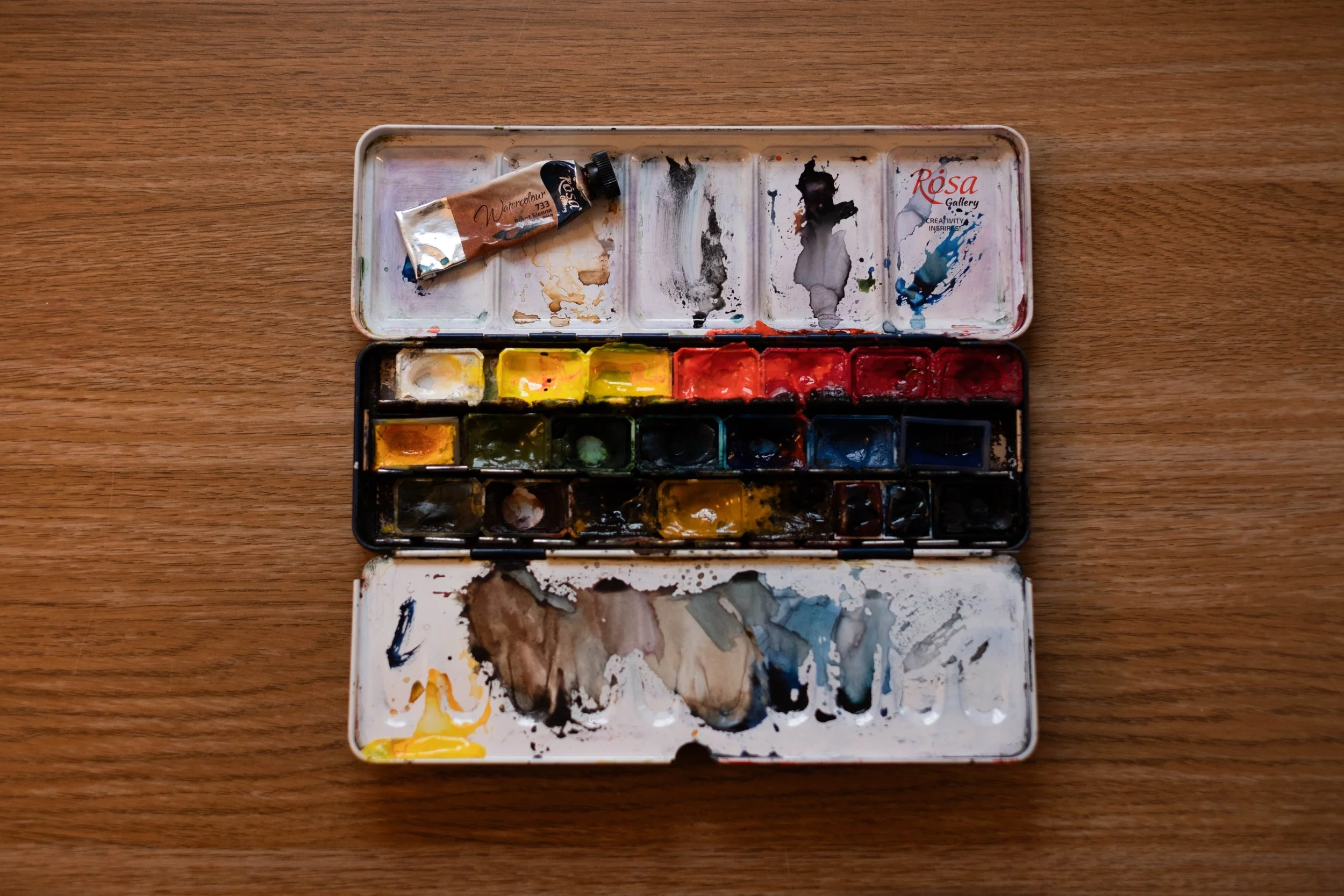
“I brought watercolours with me because they didn’t take up much space in my suitcase, and even though I worked with different paints before, I now use them a lot.”
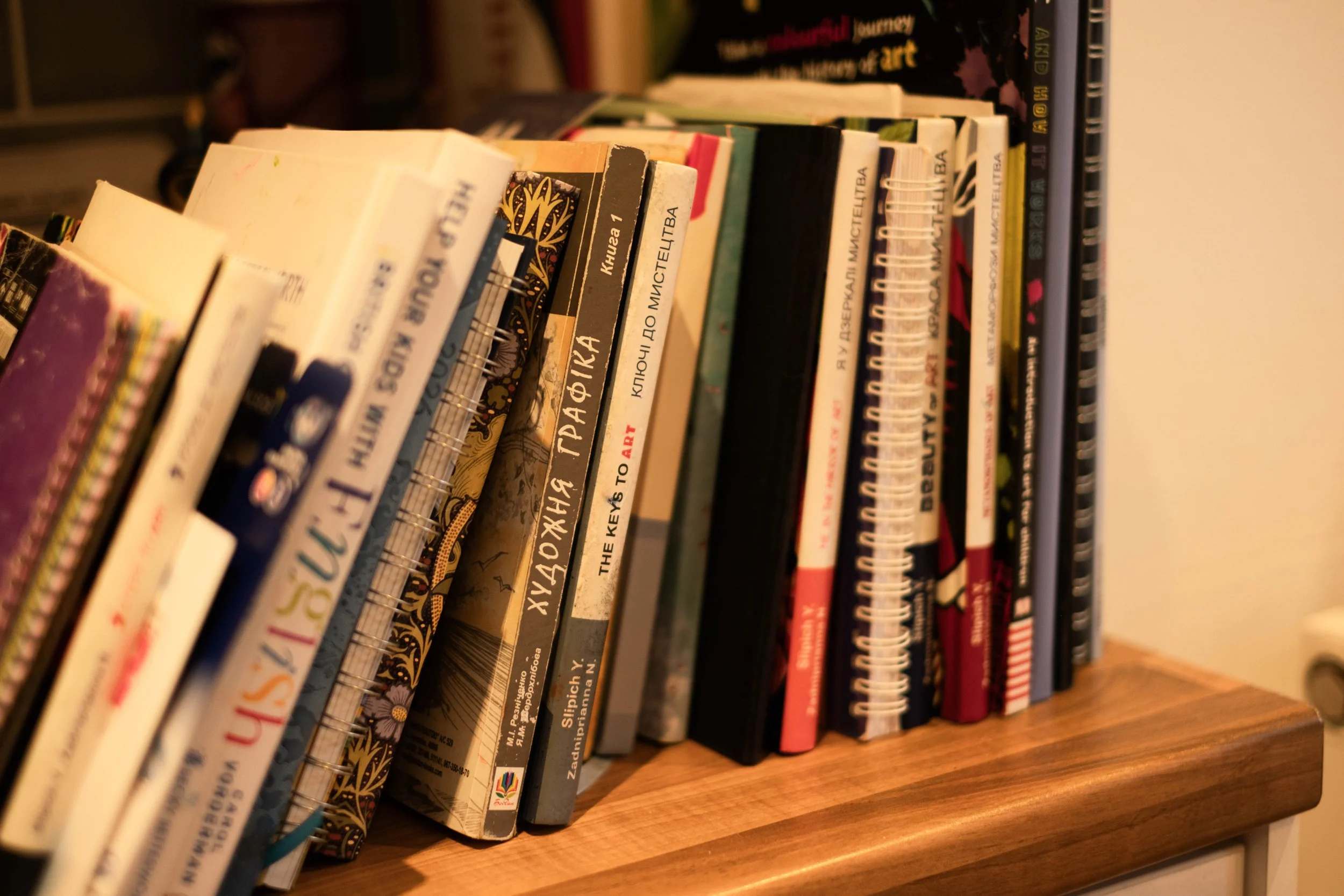
“To stay connected to home, I read Ukrainian literature. I felt the desire to sing, so I joined a Ukrainian pop choir. Additionally, I run art classes for Ukrainian children here, as a way to support and preserve our culture.”
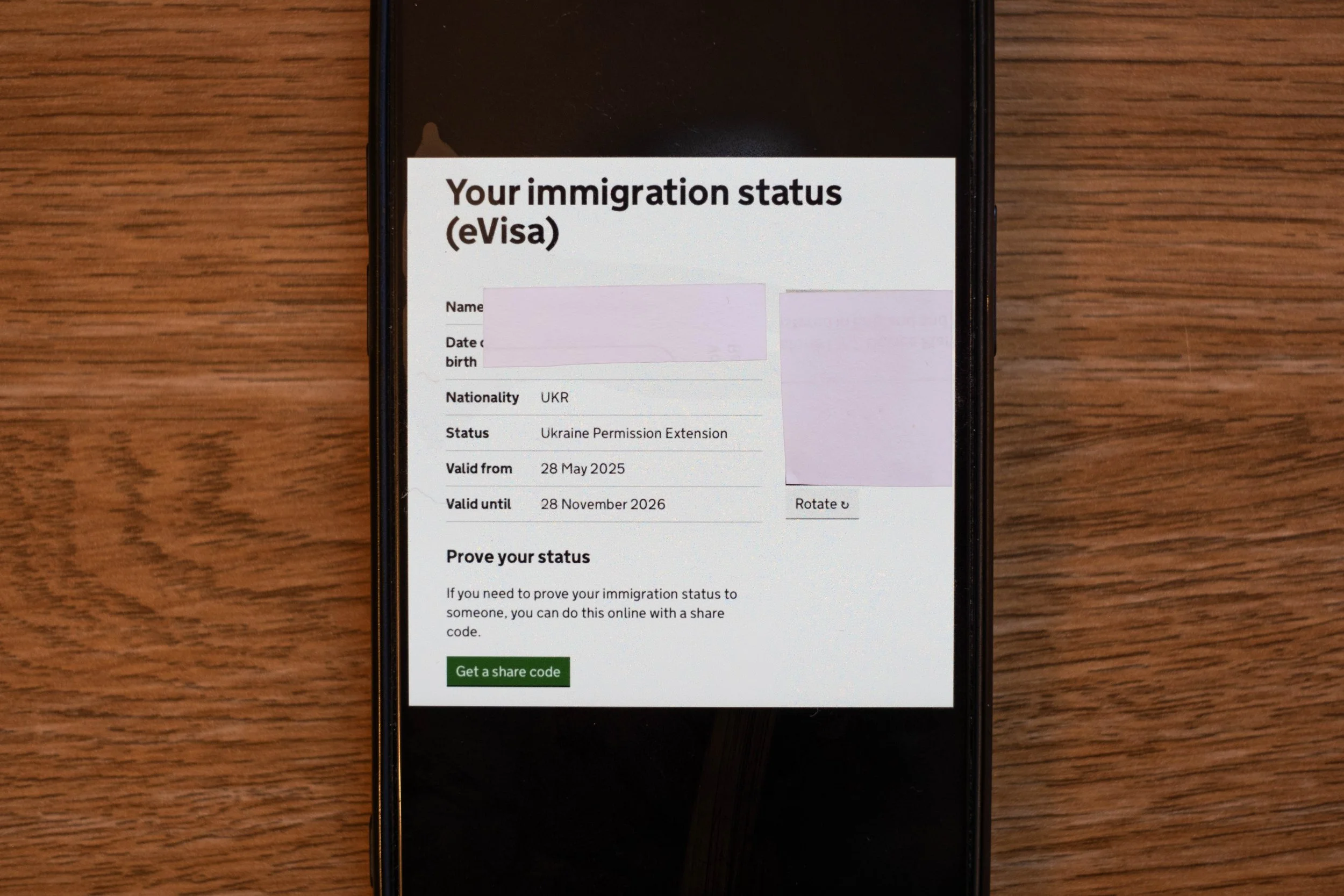
“I don’t fully see myself staying in England, but I also don’t yet know whether I plan to return to Ukraine. If I do go back, it would only be to my city, Kharkiv, which remains under constant threat from drones and missiles attacks.”
“For now, I’m trying to make the most of what life offers here in the UK, not financially, but in terms of meaning and fulfillment. If the government decides to end this scheme and doesn’t extend my visa, I’m not worried about returning.”